 National Methadone Clinics

13 North Hartford Avenue, Atlantic City, NJ, 08401
Active
- Outpatient
- Medication-assisted treatment
- Medicaid
- Medicare
City
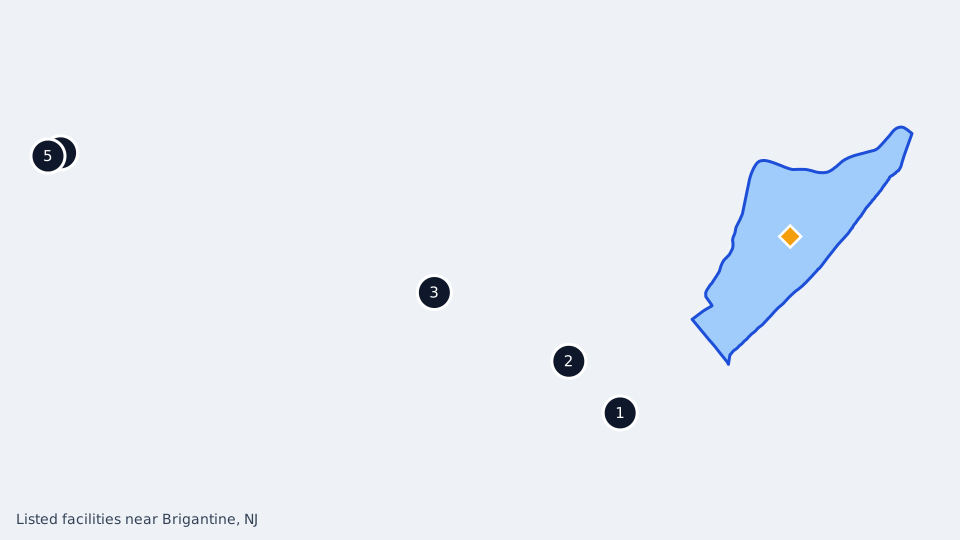
5 options near Brigantine, NJ, nearest first. Compare services and locations, then call to check availability.
Call (888) 209-0266Ask about your optionsThis number connects to our central helpline, not directly to a listed facility.
Check which services are available for your needs.
Confirm payment options and any waiting time directly.
Ask what information the program needs from you.
When you call a methadone clinic for the first time, you can ask how they handle the initial assessment and what documents you should bring. For example, at least one facility in the area—Atlanticare Behavorial Health in Atlantic City—reports that it offers medication for opioid use disorder with buprenorphine and naltrexone, and it accepts Medicaid. The same program also notes it treats adults, provides care for co-occurring mental health conditions, and offers intensive outpatient services.
Ask any clinic directly about its hours, the process for starting methadone, and whether there is a waitlist.
Call (888) 209-0266
Most methadone treatment happens at the outpatient level. You visit a clinic, usually daily at first, receive your dose under supervision, and attend counseling sessions as part of the program. Over time, many clinics grant take-home doses for stable patients, which reduces how often you need to travel.
Programs differ in what surrounds the medication: some offer group therapy, individual counseling, case management, and help with things like housing or employment, while others focus mainly on dosing. A practical way to compare is to ask each clinic what a typical week looks like in their program, including visit frequency, counseling requirements, and how take-home privileges are earned.
Call (888) 209-0266Check which services each program reports offering.
Consider travel distance and whether care is in person or remote.
Ask the program directly about payment and coverage.
Confirm how to contact the program and what to expect.
A few practical questions will tell you a lot about a program. Start with access: how quickly can you start, what are the dosing hours, and is the clinic open on weekends? Then ask about structure: what does the counseling requirement look like, and how do patients qualify for take-home medication?
Ask about flexibility, such as what happens if you are sick, working, or traveling. Close with money and privacy: what does treatment cost if you are paying yourself, what insurance is accepted, and how your information is protected.
Paying for services at methadone clinics in New Jersey often involves using private insurance, with patients encouraged to check their plan’s coverage. Public coverage, such as through New Jersey’s Medicaid program, may be an option for qualified residents, but eligibility verification is required. Additionally, sliding-scale fees based on financial need and self-pay arrangements are standard ways to manage treatment costs.
Start with the kinds of care relevant to your needs.
Check each program’s listed services, location and contact details.
Contact a program to confirm availability, costs and the next step.
Distance matters more than most people expect, because methadone treatment often starts with a visit nearly every day. A clinic that is hard to reach can turn into a reason to miss doses. Beyond location, look at how each program treats you on the phone: a clinic that answers questions patiently before you enroll tends to be easier to work with after.
Ask whether they offer counseling on site, what the dose adjustment process looks like, and whether they accept your payment method or insurance. A program that explains its rules clearly, including policies on take-home medication and missed visits, is usually easier to plan your life around.
When you call a methadone clinic for the first time, you can ask how they handle the initial assessment and what documents you should bring.

For any situation that feels unsafe or life-threatening, call 911 or go to the nearest emergency room. This includes suspected overdose, severe withdrawal that prevents keeping fluids down, or any injury or illness that gets worse quickly. You can also call or text 988, the national crisis line, if you or someone you know is struggling with thoughts of suicide or self-harm and needs someone to talk to.
Do not wait for a clinic appointment to address an emergency; emergency departments are open at all hours and can coordinate with your treatment program afterward.
If you or someone else is in immediate danger, call 911 now.
Call (888) 209-026613 North Hartford Avenue, Atlantic City, NJ, 08401
Active
1501 North Albany Avenue, Atlantic City, NJ, 08401
Active
660 Black Horse Pike, Pleasantville, NJ, 08232
Active
1455 Pinewood Boulevard, Mays Landing, NJ, 08330
Active
1409 Cantillon Boulevard, Mays Landing, NJ, 08330
Active
Contact us for more information.
These lists use only what the 5 active facilities listed for Brigantine report to SAMHSA's FindTreatment.gov. No facility pays to be included or can ask to be moved. Reporting more options is not a measure of quality, outcomes or suitability for any person. A missing option means the facility did not report it to the source, not that it is not offered. Call the facility to confirm everything before relying on it.
How this list is made: each facility scores one point for each of these 5 levels of care (settings) it reports to SAMHSA's FindTreatment.gov (Residential (24-hour); Outpatient; Intensive outpatient; Partial hospitalization / day treatment; Hospital inpatient). A facility needs at least 3 to appear. Facilities are shown from the highest count to the lowest; facilities with the same count are in alphabetical order, which has no other meaning. Up to 10 are shown.
How this list is made: each facility scores one point for each of these 7 payment and cost-assistance options it reports to SAMHSA's FindTreatment.gov (Medicaid; Medicare; Private health insurance; Military insurance (TRICARE); Cash or self-payment; Sliding fee scale; Payment assistance). A facility needs at least 4 to appear. Facilities are shown from the highest count to the lowest; facilities with the same count are in alphabetical order, which has no other meaning. Up to 10 are shown.
How this list is made: each facility scores one point for each of these 4 medications used in treatment it reports to SAMHSA's FindTreatment.gov (Buprenorphine; Methadone; Naltrexone; Medication for alcohol use disorder). A facility needs at least 2 to appear. Facilities are shown from the highest count to the lowest; facilities with the same count are in alphabetical order, which has no other meaning. Up to 10 are shown.
How this list is made: each facility scores one point for each of these 12 age groups and client groups accepted it reports to SAMHSA's FindTreatment.gov (Adolescents; Young adults; Adults; Seniors; Pregnant or postpartum women; Adult women; Adult men; Veterans; Active duty military; Criminal justice clients; Clients who have experienced trauma; Co-occurring mental and substance use disorders). A facility needs at least 5 to appear. Facilities are shown from the highest count to the lowest; facilities with the same count are in alphabetical order, which has no other meaning. Up to 10 are shown.
For your first visit, you will typically need a valid photo ID, proof of address, and any medical records or documentation about your health history. It is also a good idea to bring a list of any medications you are currently taking. Some clinics may ask for insurance information, though at least one program in the area, Atlanticare Behavorial Health, reports that it accepts Medicaid.
Yes, at least one nearby program reports that it accepts Medicaid. Atlanticare Behavorial Health, located in Atlantic City, lists Medicaid as an accepted payment type. When calling any clinic, it is best to confirm directly that your specific Medicaid plan is accepted and to ask about any other payment options if needed.
Methadone is an accepted treatment for opioid use disorder during pregnancy, and staying in treatment is generally safer than stopping on your own. The medication helps prevent the cycles of withdrawal that can stress a pregnancy. Your baby may need extra observation in the hospital after delivery, so it helps to tell your prenatal provider and delivery team that you are in a methadone program.
Plan for a longer visit than a regular doctor's appointment. Intake typically includes an evaluation of your health history, a discussion of your opioid use, and possibly lab work or a drug test. If the clinic determines that methadone is appropriate, you get your first dose that day and stay briefly so staff can see how you tolerate it. Bring a photo ID and any insurance card, and ask the clinic beforehand what else they need.
There is no fixed length of treatment. Many patients remain on methadone for a year or more, and long-term maintenance is common and legitimate when it supports stability. If and when you decide to taper, doing it slowly, under medical supervision, gives you the best chance of staying well. The right duration is whatever keeps you healthy, and you can revisit the decision with your clinic over time.
Last updated