 National Methadone Clinics
2209 NW 13th Street, Suite B, Gainesville, FL, 32609
Active
- Outpatient
- Detox
- Medication-assisted treatment
- Medicaid
City
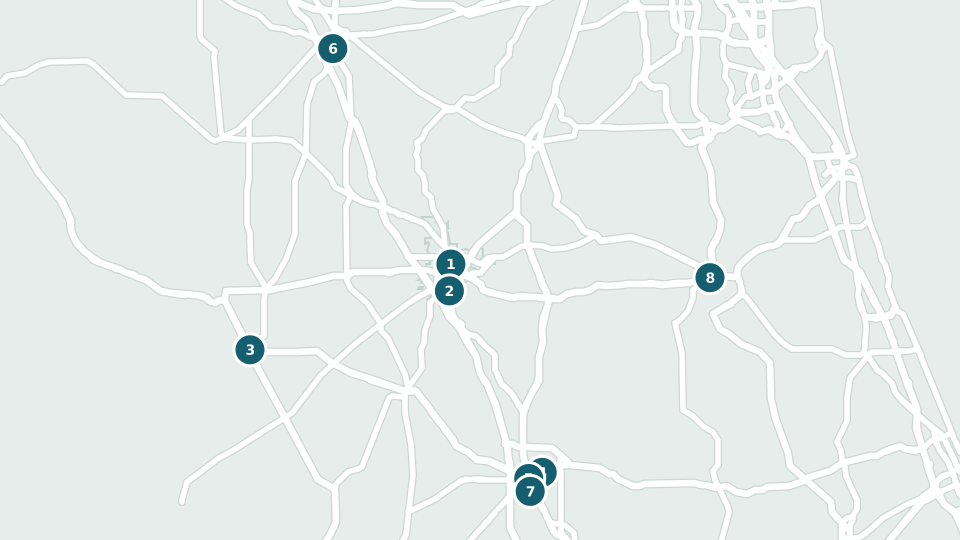
8 options near Gainesville, FL, nearest first. Compare services and locations, then call to check availability.
Call (888) 209-0266Ask about your optionsThis number connects to our central helpline, not directly to a listed facility.
Check which services are available for your needs.
Confirm payment options and any waiting time directly.
Ask what information the program needs from you.
If you are looking for medication-assisted treatment for opioid use disorder in the Gainesville area, it helps to know what to ask before your first visit. When you call a program, you can ask whether they are currently accepting new patients, what hours they hold intake appointments, and what documents or information you should bring. It is also fair to ask how soon a first dose of medication could be given, since waiting periods vary from one program to another.
Many programs require an initial assessment, a health history, and a physical check before treatment begins, so ask how long that intake process takes and whether same-day admission is possible. Other useful questions include whether counseling is part of the program, how often visits are required, and what the clinic's daily schedule looks like, since some programs ask patients to come in each day for a period of time. You can also ask whether telehealth options exist for parts of care like counseling, and how family or support people can be involved if you want them to be.
Costs and coverage vary, so asking up front about fees, billing, and any payment assistance is a reasonable and expected question. Taking notes during your calls can make it easier to compare programs and choose the one that fits your life and responsibilities.
Call (888) 209-0266
Methadone clinics provide medication for opioid use disorder through what is often called opioid treatment programs. At these programs, methadone is dispensed daily on-site, and you typically take your dose at the clinic under supervision, especially in the early weeks of treatment. As you show stability over time, some programs allow take-home doses for certain days.
Many clinics also pair the medication with counseling and drug testing as part of a structured treatment plan. Because rules for take-home doses and program requirements vary, it helps to ask how each clinic structures its day-to-day schedule and what you can expect over the first few months.
Call (888) 209-0266Check which services each program reports offering.
Consider travel distance and whether care is in person or remote.
Ask the program directly about payment and coverage.
Confirm how to contact the program and what to expect.
When you call a methadone clinic for the first time, it helps to have a few questions ready. Ask how soon you can start treatment and whether there is a wait for an intake appointment. Ask what you need to bring, such as identification or insurance information, and what the assessment involves.
Ask about the daily dosing schedule and how the clinic handles weekends and holidays. It also helps to ask about fees, whether they accept your insurance, and what happens if you need to travel or miss a dose. Finally, ask how counseling fits into the program and who you would talk to about concerns once you are enrolled.
When it comes to paying for treatment at methadone clinics in Florida, options generally fall into a few categories. Private insurance is often used, and patients are encouraged to check whether their particular plan covers medication-assisted treatment and what out-of-pocket costs might apply. Public coverage through programs like Medicaid can help eligible residents afford services, though acceptance varies and eligibility should always be confirmed in advance.
Many clinics also offer sliding-scale fees that adjust to a person's financial situation, and self-pay remains a straightforward choice for those who prefer to fund their own treatment without involving an insurer.
Start with the kinds of care relevant to your needs.
Check each program’s listed services, location and contact details.
Contact a program to confirm availability, costs and the next step.
When you compare nearby methadone clinics, start with the practical details that affect daily life. Ask about dosing hours, since you may need to visit in person each day at first. Check whether the clinic accepts your insurance, offers a sliding scale fee, or works with your state's funding programs.
Find out how long intake takes and whether there is a waiting list, because starting treatment sooner can matter. Also ask about counseling options, transportation access, and what the clinic requires for take-home doses later in treatment. A clinic that fits your schedule and budget is usually easier to stick with long term.
If you are looking for medication-assisted treatment for opioid use disorder in the Gainesville area, it helps to know what to ask before your first visit.

If you or someone else is in immediate danger, call 911 right away. That includes any overdose, severe withdrawal, or a medical crisis. You can also call or text 988 for the Suicide and Crisis Lifeline if you or someone you know is struggling emotionally.
Naloxone can reverse an opioid overdose, and many pharmacies sell it without a prescription. If you are already in treatment and a crisis comes up, tell clinic staff so they can help you figure out next steps.
If you or someone else is in immediate danger, call 911 now.
Call (888) 209-02662209 NW 13th Street, Suite B, Gainesville, FL, 32609
Active
4310 SW 13th Street, Gainesville, FL, 32608
Active
103 NE 1st Street, Chiefland, FL, 32626
Active
1601 NE 25th Avenue, Suite 601, Ocala, FL, 34470
Active
216 NE 1st Avenue, Ocala, FL, 34470
Active
439 SW Michigan Street, Lake City, FL, 32025
Active
2955 SE 3rd Court, Ocala, FL, 34471
Active
3314 Crill Avenue, Palatka, FL, 32177
Active
Compare practical factors that matter to you, such as distance from home or work, clinic hours, how soon you can start, visit frequency, and whether counseling is included. Calling each program and asking the same set of questions makes the comparison easier.
Ask whether they are accepting new patients, what the intake process involves, how long the first visit takes, what to bring, and what costs or payment options apply. You can also ask about daily visit schedules and what support is available alongside medication.
You usually start by calling the clinic or walking in to ask about intake. Most programs begin with an assessment, a review of your health history, and a discussion of your opioid use. After that, a provider determines your starting dose. The first doses are taken at the clinic, and you return daily for dosing at the beginning.
Plan for a daily visit at first, since methadone is dispensed on-site and usually taken under supervision. Clinics typically open early, often before 8 a.m., so people can dose before work. Some also offer evening hours or weekend schedules. Ask each clinic about its exact hours and how they handle holidays.
As you progress, clinics can allow take-home doses for some days, so you do not have to come in every single day. Federal rules let stable patients earn take-home doses over time, but each clinic has its own requirements for counseling attendance and drug testing. Ask how the clinic decides when someone is ready and what its policy is if you miss a visit.