 National Methadone Clinics
1000 SE Federal Highway, Stuart, FL, 34994
Active
- Outpatient
- Detox
- Medication-assisted treatment
- Medicaid
City
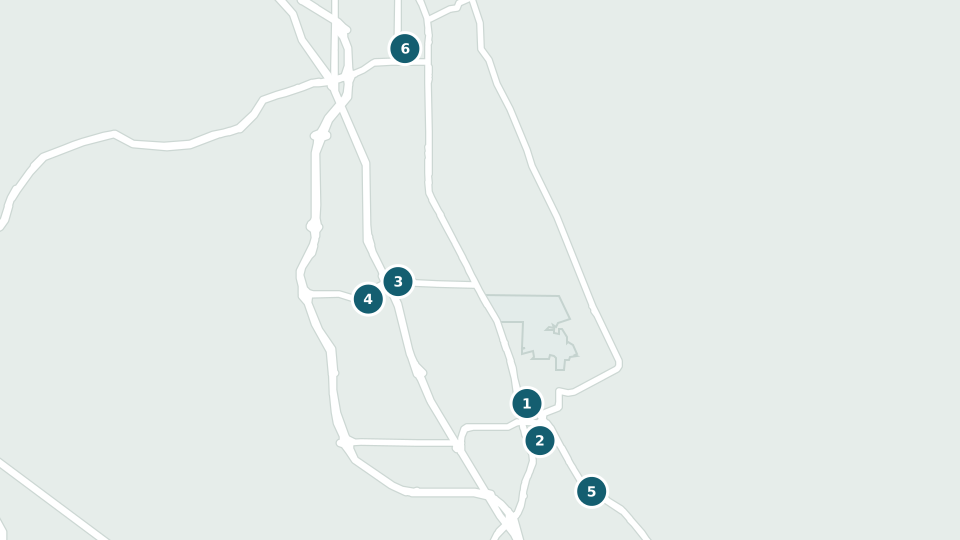
6 options near Jensen Beach, FL, nearest first. Compare services and locations, then call to check availability.
Call (888) 209-0266Ask about your optionsThis number connects to our central helpline, not directly to a listed facility.
Check which services are available for your needs.
Confirm payment options and any waiting time directly.
Ask what information the program needs from you.

The main level of care you will find at methadone clinics is outpatient opioid treatment, meaning you visit the clinic for your dose and continue living at home. Depending on the program, that daily dosing may be paired with one-on-one counseling, group sessions, case management, or help connecting to primary care and mental health services. Federal guidelines allow take-home medication for patients who meet stability requirements, so ask how each clinic handles that process.
When weighing nearby options, compare intake wait times, hours that fit your work or family schedule, and whether the program treats co-occurring conditions or refers out for them.
Call (888) 209-0266Check which services each program reports offering.
Consider travel distance and whether care is in person or remote.
Ask the program directly about payment and coverage.
Confirm how to contact the program and what to expect.
Before committing to a methadone clinic, treat the first phone call like an interview. Ask about the admission process, including whether an assessment is required before your first dose and how many days that typically takes. Ask about the daily schedule, weekend hours, and holiday arrangements.
Cover the money side: the fee per dose or per week, accepted insurance plans, and any assistance for people without coverage. Ask whether the same nurse or counselor will work with you regularly, and how relapse or missed visits are handled. Also ask how the clinic handles travel, hospital stays, or transfers, because flexibility on those points varies widely between programs.
Florida residents seeking care at methadone clinics will find that payment for services usually happens through one of a few common routes. Some individuals rely on private insurance, while others use public coverage where they qualify; in either case, confirming eligibility and specific benefits with the plan and the treatment provider beforehand is strongly advised, since coverage terms are not uniform statewide. Beyond insurance, sliding-scale fee structures are widely used to make care more affordable by tying costs to income, and straightforward self-pay options allow patients to cover expenses directly when insurance is not part of the picture.
To choose between methadone programs, first rule out any that are unrealistic for your schedule, because a daily medication visit only works if you can actually get there every day, including weekends. Then compare admission speed, since some clinics can dose you within days while others have waiting lists. Compare total cost, insurance acceptance, and any sliding-scale fees.
Ask whether the program includes counseling on site and whether counselors are available at times that work for you. Look into take-home medication policies, since more flexibility can make a big difference once you are stable. If one clinic treats you with respect and answers questions honestly when you call, weigh that heavily in your decision.
Emergencies should never be routed through a methadone clinic.

Emergencies should never be routed through a methadone clinic. If someone is unresponsive, has trouble breathing, or may have overdosed, call 911 at once and stay with the person until help arrives. For psychiatric emergencies or thoughts of suicide, the 988 Suicide and Crisis Lifeline offers free, confidential support around the clock by phone or text.
Once the immediate danger has passed, reach out to your treatment program to talk about how the event affects your ongoing care, whether that means a missed dose, a hospital stay, or a need for extra support.
If you or someone else is in immediate danger, call 911 now.
Call (888) 209-02661000 SE Federal Highway, Stuart, FL, 34994
Active
1131 SE Indian Street, Stuart, FL, 34997
Active
2349 SW Cary Street, Port Saint Lucie, FL, 34984
Active
2749 SW Port Saint Lucie Boulevard, Port Saint Lucie, FL, 34953
Active
6300 SE Federal Highway, Stuart, FL, 34997
Active
1302 North Lawnwood Circle, Suite B, Fort Pierce, FL, 34950
Active
A first visit usually includes an assessment of your health and substance use history, and, if the program fits your needs, a discussion about starting medication as part of a longer-term treatment plan that includes counseling. Calling ahead to ask what to bring, what to expect on day one, and what the schedule looks like can help you prepare.
Helpful questions include: how often do I need to visit, what counseling is included, what happens if I need to travel or miss a dose, how are take-home privileges earned over time, and what the total cost and payment options are. Asking about wait times and hours of operation can also help you plan.
There is no fixed length of time; treatment length depends on your goals, progress, and medical needs. Many people stay in treatment for a year or more, and some continue longer-term maintenance because it keeps them stable. Others work with their treatment team to gradually reduce the dose over time. The decision about stopping or tapering should always be made with a medical provider, since stopping too quickly raises the risk of relapse.
Methadone is a long-acting opioid medication, and taking it regularly causes physical dependence, which is different from the harmful pattern of addiction it is used to treat. Under medical supervision, methadone stabilizes people, reduces cravings, and lets them rebuild daily life. Many patients stay on a stable dose for years with good results. Any decision to change or stop the dose should be made with the prescribing clinic.
In most cases, methadone for opioid use disorder is only available through certified opioid treatment programs, not a standard doctor's prescription, which is why clinics exist. However, other medications for opioid use disorder, like buprenorphine, can be prescribed in regular office settings. Some people choose that route instead of or alongside clinic-based care. Ask your doctor or a local treatment program which options are available to you.