 National Methadone Clinics
1530 Harrison Avenue, Panama City, FL, 32405
Active
- Outpatient
- Detox
- Medication-assisted treatment
- Medicaid
City
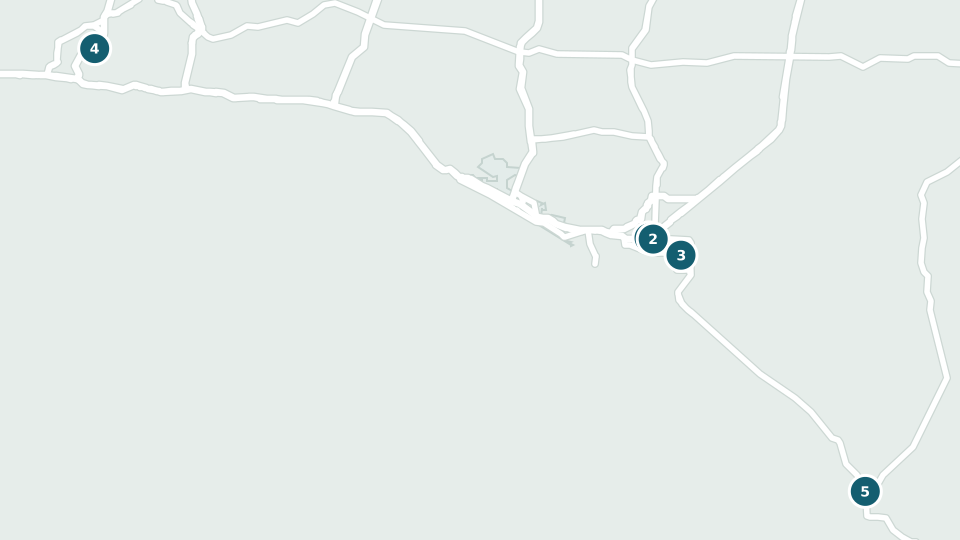
5 options near Panama City Beach, FL, nearest first. Compare services and locations, then call to check availability.
Call (888) 209-0266Ask about your optionsThis number connects to our central helpline, not directly to a listed facility.
Check which services are available for your needs.
Confirm payment options and any waiting time directly.
Ask what information the program needs from you.
If you are looking for medication-assisted treatment for opioid use disorder, it helps to know what to ask before your first visit. When you contact a program, you can ask what a typical intake day looks like, what documents or identification to bring, and how dosing is scheduled once someone starts. It is also fair to ask about the program's hours, since daily visits are often part of methadone treatment, and to ask how family members or a support person can be involved.
Programs vary in how they combine medication with counseling and other services, so asking what a full week of treatment looks like can give you a clearer picture. If you rely on a specific type of insurance or public coverage, that is worth raising early in the conversation. You do not need to have everything figured out before you call; asking honest questions is a reasonable way to start.
If there is no program close to Panama City Beach, staff at a nearby program can often tell you about options within driving distance or next steps for getting assessed.
Call (888) 209-0266
Most methadone treatment happens at the outpatient level. You visit a clinic, usually daily at first, receive your dose under supervision, and attend counseling sessions as part of the program. Over time, many clinics grant take-home doses for stable patients, which reduces how often you need to travel.
Programs differ in what surrounds the medication: some offer group therapy, individual counseling, case management, and help with things like housing or employment, while others focus mainly on dosing. A practical way to compare is to ask each clinic what a typical week looks like in their program, including visit frequency, counseling requirements, and how take-home privileges are earned.
Call (888) 209-0266Check which services each program reports offering.
Consider travel distance and whether care is in person or remote.
Ask the program directly about payment and coverage.
Confirm how to contact the program and what to expect.
A few practical questions will tell you a lot about a program. Start with access: how quickly can you start, what are the dosing hours, and is the clinic open on weekends? Then ask about structure: what does the counseling requirement look like, and how do patients qualify for take-home medication?
Ask about flexibility, such as what happens if you are sick, working, or traveling. Close with money and privacy: what does treatment cost if you are paying yourself, what insurance is accepted, and how your information is protected.
When it comes to paying for treatment at methadone clinics in Florida, options generally fall into a few categories. Private insurance is often used, and patients are encouraged to check whether their particular plan covers medication-assisted treatment and what out-of-pocket costs might apply. Public coverage through programs like Medicaid can help eligible residents afford services, though acceptance varies and eligibility should always be confirmed in advance.
Many clinics also offer sliding-scale fees that adjust to a person's financial situation, and self-pay remains a straightforward choice for those who prefer to fund their own treatment without involving an insurer.
Start with the kinds of care relevant to your needs.
Check each program’s listed services, location and contact details.
Contact a program to confirm availability, costs and the next step.
Distance matters more than most people expect, because methadone treatment often starts with a visit nearly every day. A clinic that is hard to reach can turn into a reason to miss doses. Beyond location, look at how each program treats you on the phone: a clinic that answers questions patiently before you enroll tends to be easier to work with after.
Ask whether they offer counseling on site, what the dose adjustment process looks like, and whether they accept your payment method or insurance. A program that explains its rules clearly, including policies on take-home medication and missed visits, is usually easier to plan your life around.
If you are looking for medication-assisted treatment for opioid use disorder, it helps to know what to ask before your first visit.

For any situation that feels unsafe or life-threatening, call 911 or go to the nearest emergency room. This includes suspected overdose, severe withdrawal that prevents keeping fluids down, or any injury or illness that gets worse quickly. You can also call or text 988, the national crisis line, if you or someone you know is struggling with thoughts of suicide or self-harm and needs someone to talk to.
Do not wait for a clinic appointment to address an emergency; emergency departments are open at all hours and can coordinate with your treatment program afterward.
If you or someone else is in immediate danger, call 911 now.
Call (888) 209-02661530 Harrison Avenue, Panama City, FL, 32405
Active
525 East 15th Street, Panama City, FL, 32405
Active
4000 East 3rd Street, Panama City, FL, 32405
Active
1 11th Avenue, Suite C-1, Shalimar, FL, 32579
Active
311 Williams Avenue, Port Saint Joe, FL, 32456
Active
Ask about intake steps, what to bring, daily or weekly visit schedules, how counseling fits into treatment, accepted payment and coverage options, and how the program handles missed doses or travel. Writing your questions down before you call can make the conversation easier.
No. You do not need to stop on your own before an assessment. A clinic evaluates you first and decides with you whether medication is appropriate and what the starting approach should be. Trying to stop on your own beforehand can be uncomfortable and is not required for the first appointment.
Methadone is an accepted treatment for opioid use disorder during pregnancy, and staying in treatment is generally safer than stopping on your own. The medication helps prevent the cycles of withdrawal that can stress a pregnancy. Your baby may need extra observation in the hospital after delivery, so it helps to tell your prenatal provider and delivery team that you are in a methadone program.
Plan for a longer visit than a regular doctor's appointment. Intake typically includes an evaluation of your health history, a discussion of your opioid use, and possibly lab work or a drug test. If the clinic determines that methadone is appropriate, you get your first dose that day and stay briefly so staff can see how you tolerate it. Bring a photo ID and any insurance card, and ask the clinic beforehand what else they need.
There is no fixed length of treatment. Many patients remain on methadone for a year or more, and long-term maintenance is common and legitimate when it supports stability. If and when you decide to taper, doing it slowly, under medical supervision, gives you the best chance of staying well. The right duration is whatever keeps you healthy, and you can revisit the decision with your clinic over time.