 National Methadone Clinics
20 Page Drive, Pinehurst, NC, 28374
Active
- Outpatient
- Medication-assisted treatment
- Medicaid
- Medicare
City
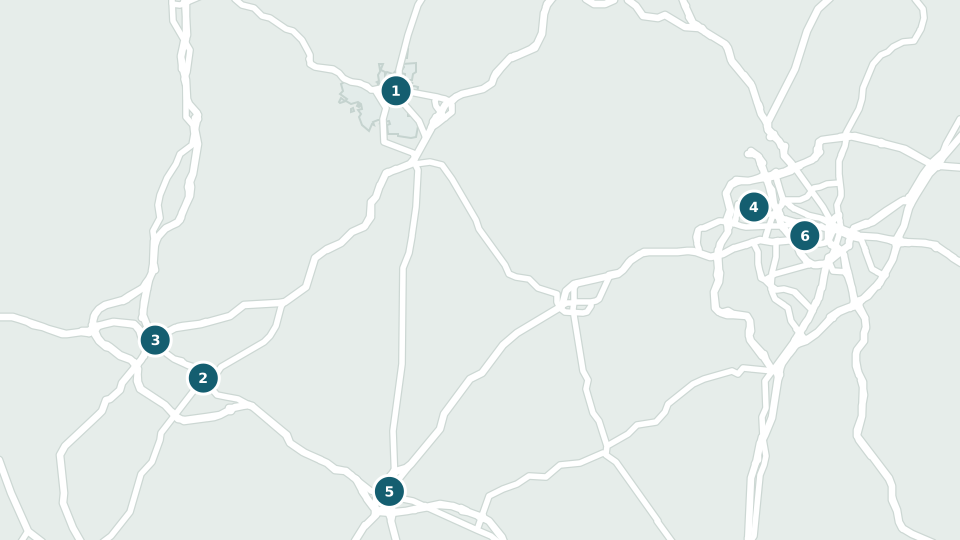
6 options near Pinehurst, NC, nearest first. Compare services and locations, then call to check availability.
Call (888) 209-0266Ask about your optionsThis number connects to our central helpline, not directly to a listed facility.
Check which services are available for your needs.
Confirm payment options and any waiting time directly.
Ask what information the program needs from you.
If you are considering methadone treatment in the Pinehurst area, it helps to know what to ask before your first visit. Programs of this kind typically begin with an intake appointment, so you can ask how long that visit will take, what documents or identification you should bring, and what the schedule of dosing visits looks like once treatment starts. It is also fair to ask whether the program offers medication in addition to methadone, such as buprenorphine, and whether counseling is part of the plan or available on site.
If you are dealing with more than one issue at once, ask whether the program can support co-occurring mental health concerns alongside your treatment. Some programs also serve specific groups, so it can be worth asking whether they work with adults only, with both men and women, with veterans or active-duty military, or with people involved in the criminal justice system. Accreditation is another reasonable question to raise, since some programs hold CARF accreditation.
Because details such as hours, costs, and insurance can change, the most reliable answers come from calling a program directly and asking about your own situation.
Call (888) 209-0266
Methadone clinics provide one specific type of care: medication-assisted treatment for opioid use disorder. Methadone itself is a daily medication that reduces cravings and withdrawal symptoms, and federal rules require it to be dispensed at a licensed clinic rather than a regular pharmacy. Some programs are outpatient-only, while others also offer counseling, drug testing, and referrals to doctors who prescribe other medications like buprenorphine.
When comparing programs, ask whether counseling is included on site, how often you must visit, and whether the clinic can connect you to primary care or mental health services if you need more support.
Call (888) 209-0266Check which services each program reports offering.
Consider travel distance and whether care is in person or remote.
Ask the program directly about payment and coverage.
Confirm how to contact the program and what to expect.
When you call a methadone clinic for the first time, ask how soon a new patient can be seen and what you need to bring. Ask about dosing hours on weekdays and weekends, and how the clinic handles missed doses. Ask what the intake evaluation includes and whether there is a waitlist.
It also helps to ask how take-home doses are earned, what counseling is required and when it happens, and what happens if you need to travel. Finally, ask about payment: what insurance they accept or what the self-pay cost is per visit or per week.
Payment for treatment at methadone clinics in North Carolina usually comes from one of several common sources. Some individuals use private insurance, and because policies differ in what they cover for medication-assisted treatment, contacting your insurer to confirm benefits is an important first step. Others may qualify for North Carolina Medicaid or other public coverage, provided they meet the state's eligibility requirements.
For people without insurance, sliding-scale fees that reflect ability to pay may be offered at certain locations, and self-payment is generally available as well.
Start with the kinds of care relevant to your needs.
Check each program’s listed services, location and contact details.
Contact a program to confirm availability, costs and the next step.
Start with the basics that affect daily life: how far the clinic is from home or work, what time dosing hours open, and whether the schedule fits around a job or childcare. Then ask about the intake process, including how soon you can start treatment and what paperwork or payment you need on the first day. Compare counseling options next, since programs vary in whether therapy is individual, group, or both, and whether it is required with every visit.
Finally, ask how the clinic handles take-home doses, schedule conflicts, and referrals to other doctors, because these details shape how sustainable the program will be for you.
If you are considering methadone treatment in the Pinehurst area, it helps to know what to ask before your first visit.

If you or someone near you is in immediate danger, call 911 right away. Emergency responders can help regardless of the situation, and you do not need to be certain it is an emergency before calling. If you are worried about an overdose, many communities also provide naloxone, a medication that can reverse opioid overdoses, and emergency dispatchers can guide you through using it while help is on the way.
For methadone patients specifically, it is important that emergency staff know about methadone treatment, so mention it openly if you or a loved one is being treated.
If you or someone else is in immediate danger, call 911 now.
Call (888) 209-026620 Page Drive, Pinehurst, NC, 28374
Active
815 West Hamlet Avenue, Hamlet, NC, 28345
Active
523 Rockingham Road, Rockingham, NC, 28379
Active
6020 Morganton Road, Fayetteville, NC, 28314
Active
205 Fairly Street, Laurinburg, NC, 28352
Active
572 Executive Place, Fayetteville, NC, 28305
Active
Ask about the intake process, what to bring, how soon a first appointment might be scheduled, dosing hours, and what counseling or other medications, such as buprenorphine, the program offers. If cost is a concern, ask directly about payment and insurance options before you commit to a visit.
Some programs can also support people with co-occurring mental health concerns and may offer buprenorphine alongside methadone. Because services vary by location, it is best to describe your full situation when you call so the program can tell you whether it fits your needs or can point you elsewhere.
Yes, methadone is approved for use during pregnancy and is considered a standard approach to treating opioid use disorder in pregnant patients. Stopping opioids suddenly during pregnancy can be harmful, and methadone helps stabilize both the patient and the pregnancy. Babies exposed to methadone may need monitoring after birth for withdrawal symptoms, so let your prenatal care team know about your treatment so they can plan accordingly.
The first visit usually involves an intake assessment, paperwork, a medical history, and a physical check such as bloodwork or a drug screen. If you are admitted, you receive your first dose the same day, and medical staff watch how you respond before you leave. Expect the process to take a few hours, and ask in advance what identification, payment, or insurance details you should bring.
How long you stay on methadone is a personal decision made with your treatment team. Some people use it for a year or two, while others stay on it for many years because it keeps them stable. Research generally supports longer treatment periods, and reducing the dose too quickly raises the risk of relapse. There is no requirement to stop by a certain date, so the timeline should reflect your progress and goals.