 National Methadone Clinics
600 Commercial Court, Suite A, Savannah, GA, 31406
Active
- Outpatient
- Medication-assisted treatment
- Medicaid
- Medicare
City
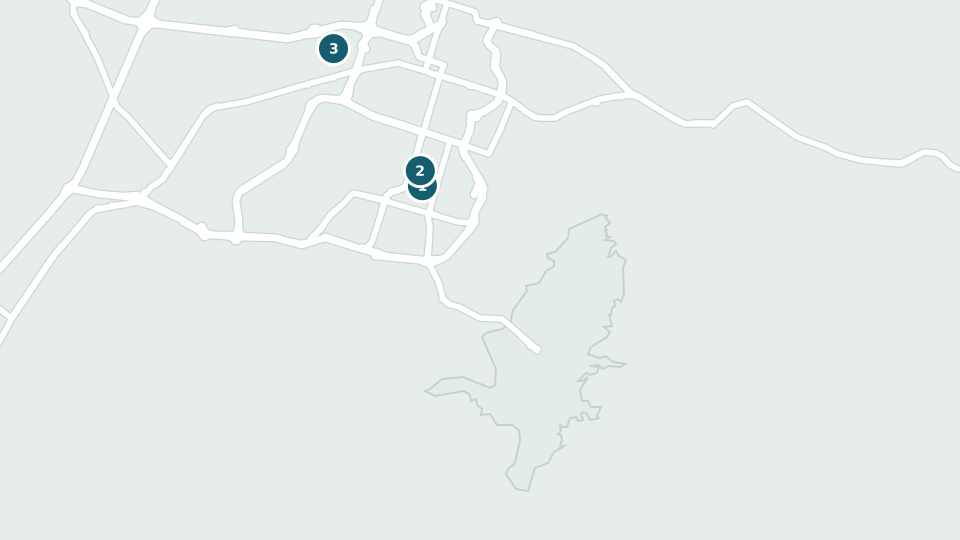
3 options near Skidaway Island, GA, nearest first. Compare services and locations, then call to check availability.
Call (888) 209-0266Ask about your optionsThis number connects to our central helpline, not directly to a listed facility.
Check which services are available for your needs.
Confirm payment options and any waiting time directly.
Ask what information the program needs from you.
If you are looking for methadone treatment near Skidaway Island, the closest programs are in Savannah, and it helps to know what to ask before you go. First, confirm that the location is a certified opioid treatment program, since methadone for opioid use disorder is provided through that type of facility. Some nearby programs also offer other medications, such as buprenorphine and naltrexone, so you can ask which option fits your situation if you are still deciding.
It is also fair to ask about payment. Confirmed payment options at area programs include Medicaid, Medicare, private insurance, and self-pay. If you are dealing with more than one condition, ask whether the program treats co-occurring mental health concerns alongside substance use, since outpatient programs with that capability exist in the region.
On a first visit, staff typically review your health history, discuss your goals, and set up a dosing and counseling schedule, so bringing a list of questions and any current medications can make the appointment easier.
Call (888) 209-0266
Methadone clinics provide one specific type of care: medication-assisted treatment for opioid use disorder. Methadone itself is a daily medication that reduces cravings and withdrawal symptoms, and federal rules require it to be dispensed at a licensed clinic rather than a regular pharmacy. Some programs are outpatient-only, while others also offer counseling, drug testing, and referrals to doctors who prescribe other medications like buprenorphine.
When comparing programs, ask whether counseling is included on site, how often you must visit, and whether the clinic can connect you to primary care or mental health services if you need more support.
Call (888) 209-0266Check which services each program reports offering.
Consider travel distance and whether care is in person or remote.
Ask the program directly about payment and coverage.
Confirm how to contact the program and what to expect.
When you call a methadone clinic for the first time, ask how soon a new patient can be seen and what you need to bring. Ask about dosing hours on weekdays and weekends, and how the clinic handles missed doses. Ask what the intake evaluation includes and whether there is a waitlist.
It also helps to ask how take-home doses are earned, what counseling is required and when it happens, and what happens if you need to travel. Finally, ask about payment: what insurance they accept or what the self-pay cost is per visit or per week.
If you are considering treatment at a methadone clinic in Georgia, understanding payment options ahead of time can make the process easier. Self-pay is a standard choice for many people, allowing visitors to pay out of pocket for medication and counseling services. Others rely on private insurance plans, which frequently cover opioid treatment, though the extent of coverage depends on the specific policy, so confirming eligibility with your insurer is a wise first step.
Public programs may assist eligible residents, and sliding-scale fees are commonly available to help reduce costs for those with limited income, making treatment more accessible statewide.
Start with the kinds of care relevant to your needs.
Check each program’s listed services, location and contact details.
Contact a program to confirm availability, costs and the next step.
Start with the basics that affect daily life: how far the clinic is from home or work, what time dosing hours open, and whether the schedule fits around a job or childcare. Then ask about the intake process, including how soon you can start treatment and what paperwork or payment you need on the first day. Compare counseling options next, since programs vary in whether therapy is individual, group, or both, and whether it is required with every visit.
Finally, ask how the clinic handles take-home doses, schedule conflicts, and referrals to other doctors, because these details shape how sustainable the program will be for you.
If you are looking for methadone treatment near Skidaway Island, the closest programs are in Savannah, and it helps to know what to ask before you go.

If you or someone near you is in immediate danger, call 911 right away. Emergency responders can help regardless of the situation, and you do not need to be certain it is an emergency before calling. If you are worried about an overdose, many communities also provide naloxone, a medication that can reverse opioid overdoses, and emergency dispatchers can guide you through using it while help is on the way.
For methadone patients specifically, it is important that emergency staff know about methadone treatment, so mention it openly if you or a loved one is being treated.
If you or someone else is in immediate danger, call 911 now.
Call (888) 209-0266600 Commercial Court, Suite A, Savannah, GA, 31406
Active
6707 Forest Park Drive, Savannah, GA, 31406
Active
145 Southern Boulevard, Suite B, Savannah, GA, 31405
Active
Yes. Programs within reach of Skidaway Island include opioid treatment programs that offer methadone as well as buprenorphine and naltrexone, along with outpatient counseling and support for co-occurring mental health conditions.
Ask whether the program is a certified opioid treatment program, which medications it offers, which payment methods it accepts, and whether it can serve your situation, such as pregnancy, age, or involvement with the justice system. Nearby programs have confirmed options including Medicaid, Medicare, private insurance, and self-pay.
Yes, methadone is approved for use during pregnancy and is considered a standard approach to treating opioid use disorder in pregnant patients. Stopping opioids suddenly during pregnancy can be harmful, and methadone helps stabilize both the patient and the pregnancy. Babies exposed to methadone may need monitoring after birth for withdrawal symptoms, so let your prenatal care team know about your treatment so they can plan accordingly.
The first visit usually involves an intake assessment, paperwork, a medical history, and a physical check such as bloodwork or a drug screen. If you are admitted, you receive your first dose the same day, and medical staff watch how you respond before you leave. Expect the process to take a few hours, and ask in advance what identification, payment, or insurance details you should bring.
How long you stay on methadone is a personal decision made with your treatment team. Some people use it for a year or two, while others stay on it for many years because it keeps them stable. Research generally supports longer treatment periods, and reducing the dose too quickly raises the risk of relapse. There is no requirement to stop by a certain date, so the timeline should reflect your progress and goals.