 National Methadone Clinics
4195 Mariner Boulevard, Spring Hill, FL, 34609
Active
- Outpatient
- Medication-assisted treatment
- Medicaid
- Medicare
City
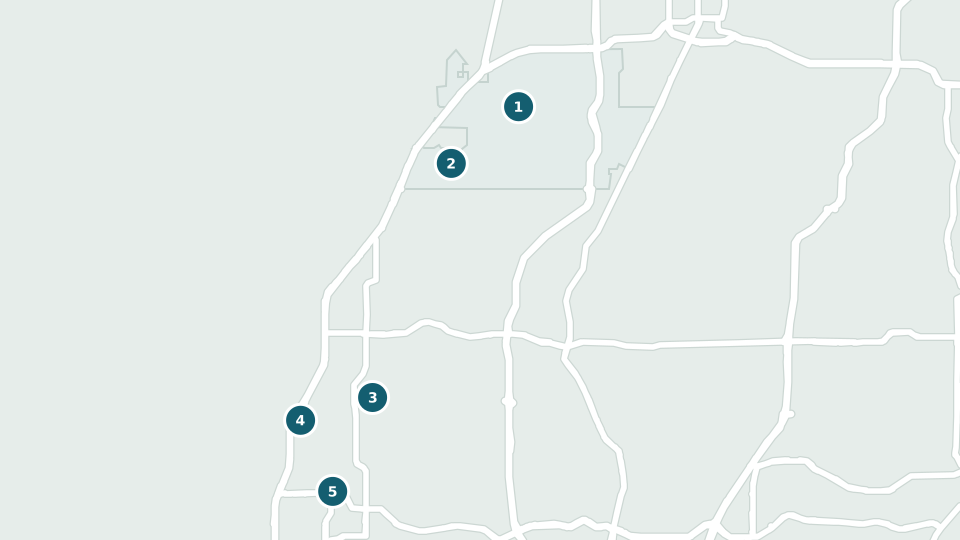
5 options near Spring Hill, FL, nearest first. Compare services and locations, then call to check availability.
Call (888) 209-0266Ask about your optionsThis number connects to our central helpline, not directly to a listed facility.
Check which services are available for your needs.
Confirm payment options and any waiting time directly.
Ask what information the program needs from you.
If you are considering medication-based treatment for opioid use disorder in Spring Hill, it helps to know what to ask before your first visit. A confirmed Opioid Treatment Program in Spring Hill provides methadone and buprenorphine as medication options, along with an intensive outpatient level of care, for adult men and women. When you call, you can ask how intake works, what paperwork or identification to bring, and what the schedule for dosing visits looks like.
Because the program is accredited by CARF and accepts both Medicaid and Medicare, it is reasonable to ask how billing is handled and whether there are costs your plan may not cover. You can also ask whether counseling is part of the program, how family or work schedules are accommodated, and what happens if you need to miss a visit. Taking a few minutes to ask these questions up front can make the first appointment feel less overwhelming.
Call (888) 209-0266
Methadone clinics provide medication-assisted treatment for opioid use disorder. Methadone itself is a daily medication, so most programs are built around regular clinic visits where you dose on-site and meet with counseling staff. Beyond the daily dosing visit, many programs offer different levels of support, such as individual counseling, group therapy, and drug screening.
When comparing programs, ask how often you must visit, whether take-home doses become available over time, and what counseling is included alongside the medication.
Call (888) 209-0266Check which services each program reports offering.
Consider travel distance and whether care is in person or remote.
Ask the program directly about payment and coverage.
Confirm how to contact the program and what to expect.
When you call a methadone clinic for the first time, it helps to have your questions written down. Ask what you need to bring to intake, how quickly you can be seen, and what the first week of treatment looks like. Ask about dosing hours, since you will likely visit daily at first.
You should also ask whether they accept your insurance or offer income-based fees, what counseling is included, and how take-home doses are earned. Finally, ask what happens if you miss a visit, because knowing the policy in advance can prevent unnecessary worry later.
When it comes to paying for treatment at methadone clinics in Florida, options generally fall into a few categories. Private insurance is often used, and patients are encouraged to check whether their particular plan covers medication-assisted treatment and what out-of-pocket costs might apply. Public coverage through programs like Medicaid can help eligible residents afford services, though acceptance varies and eligibility should always be confirmed in advance.
Many clinics also offer sliding-scale fees that adjust to a person's financial situation, and self-pay remains a straightforward choice for those who prefer to fund their own treatment without involving an insurer.
When comparing nearby methadone clinics, start with the basics of daily life: how close the clinic is to home or work, what hours it opens for dosing, and how early you would need to arrive. Next, ask about the structure of care, including how dosing decisions are made, whether take-home medication is possible as you progress, and what counseling is offered. Finally, ask practical questions about cost, insurance or payment plans, and what happens if you miss a dose.
A program that fits your schedule and answers your questions clearly is easier to stay with long term.
If you are considering medication-based treatment for opioid use disorder in Spring Hill, it helps to know what to ask before your first visit.

If you or someone else is in immediate danger, call 911 right away. Emergency services can respond to overdoses, medical crises, and situations where someone may harm themselves or others. You do not need to be certain it is an emergency before calling; dispatchers are trained to help you figure that out.
If you are worried about a drug overdose in your home, keeping the emergency number easy to find and telling responders about any substances involved can help them respond faster.
If you or someone else is in immediate danger, call 911 now.
Call (888) 209-02664195 Mariner Boulevard, Spring Hill, FL, 34609
Active
1245 Kass Circle, Spring Hill, FL, 34606
Active
9270 Royal Palm Avenue, New Port Richey, FL, 34654
Active
7720 Washington Street, Suite MAPS, Port Richey, FL, 34668
Active
4041 Rowan Road, New Port Richey, FL, 34653
Active
Yes. A medication-based treatment program in Spring Hill is confirmed to offer methadone as well as buprenorphine, operates as an Opioid Treatment Program, and also provides an intensive outpatient level of care.
Yes. The confirmed program in Spring Hill serves adults of all genders, holds CARF accreditation, and accepts both Medicaid and Medicare. Ask the clinic directly about its intake steps, current availability, and any costs not covered by your plan.
Methadone is a long-acting medication that reduces withdrawal symptoms and cravings in people with opioid use disorder. Taken daily under a clinic's supervision, it helps many people stop using other opioids and stabilize their lives. It does not produce the same high as many misused opioids when taken as prescribed. Treatment length varies by person and is decided with the clinic's medical staff.
Not always. At the start of treatment, most clinics require daily visits so staff can observe dosing and adjust it safely. As you progress and follow the program's requirements, federal rules allow earning take-home doses, which can reduce visits to a few times a month for stable patients. Ask each clinic how their take-home process works and how long it typically takes.
Costs vary by clinic and by state, and many clinics accept Medicaid or offer sliding-scale fees based on income. Private insurance coverage also differs, so the most reliable step is to call the clinic and ask what they accept before your intake appointment. If cost is a barrier, state-funded programs and some nonprofit clinics may charge on a sliding scale. Getting a clear answer about payment before you start helps avoid surprises.