 National Methadone Clinics
4255 Chamblee Tucker Road, Atlanta, GA, 30340
Active
- Outpatient
- Medication-assisted treatment
- Medicare
- Self-pay
City
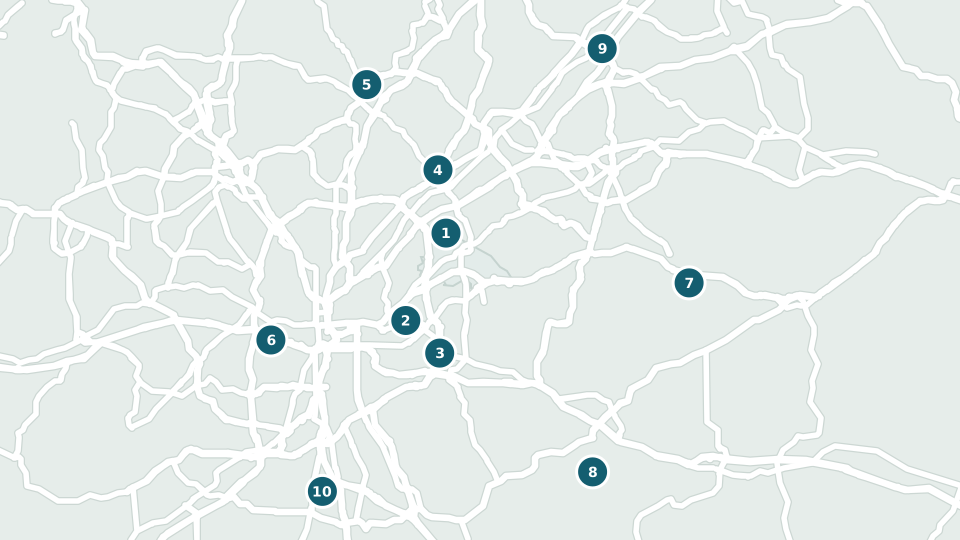
10 options near Tucker, GA, nearest first. Compare services and locations, then call to check availability.
Call (888) 209-0266Ask about your optionsThis number connects to our central helpline, not directly to a listed facility.
Check which services are available for your needs.
Confirm payment options and any waiting time directly.
Ask what information the program needs from you.
If you are looking into medication-assisted treatment near Tucker, it helps to know what to ask before your first visit. Call a program and ask what an intake appointment involves, what identification or paperwork you should bring, and how quickly a first dose of medication can be scheduled. You can also ask about clinic hours, how often visits are required at the start, and what counseling services are included alongside medication.
If you are dealing with more than one health concern at the same time, ask whether the program treats co-occurring conditions or can refer you to care that does. Parents and caregivers of teens may want to ask whether a program accepts adolescents. Other useful questions include how dosing schedules work over time, what happens if you need to travel or move, and what the program does to support long-term recovery, such as counseling, case management, or referrals to community supports.
Taking notes during these calls can make it easier to compare programs and choose the one that fits your life, your schedule, and how you get to appointments.
Call (888) 209-0266
Methadone clinics provide medication for opioid use disorder through what is often called opioid treatment programs. At these programs, methadone is dispensed daily on-site, and you typically take your dose at the clinic under supervision, especially in the early weeks of treatment. As you show stability over time, some programs allow take-home doses for certain days.
Many clinics also pair the medication with counseling and drug testing as part of a structured treatment plan. Because rules for take-home doses and program requirements vary, it helps to ask how each clinic structures its day-to-day schedule and what you can expect over the first few months.
Call (888) 209-0266Check which services each program reports offering.
Consider travel distance and whether care is in person or remote.
Ask the program directly about payment and coverage.
Confirm how to contact the program and what to expect.
When you call a methadone clinic for the first time, it helps to have a few questions ready. Ask how soon you can start treatment and whether there is a wait for an intake appointment. Ask what you need to bring, such as identification or insurance information, and what the assessment involves.
Ask about the daily dosing schedule and how the clinic handles weekends and holidays. It also helps to ask about fees, whether they accept your insurance, and what happens if you need to travel or miss a dose. Finally, ask how counseling fits into the program and who you would talk to about concerns once you are enrolled.
Across Georgia, methadone clinics are typically paid for through a few common routes. Many visitors use private health insurance, though coverage details and network participation vary, so it is important to confirm your benefits and eligibility directly with both your insurer and the clinic before enrollment. Public coverage options, such as Medicaid, may also be available to those who qualify, but acceptance can differ from one provider to another, and verification of eligibility is always recommended.
For those without insurance, many facilities offer sliding-scale fees based on income, and straightforward self-pay arrangements are another widely used option for covering the cost of treatment.
Start with the kinds of care relevant to your needs.
Check each program’s listed services, location and contact details.
Contact a program to confirm availability, costs and the next step.
When you compare nearby methadone clinics, start with the practical details that affect daily life. Ask about dosing hours, since you may need to visit in person each day at first. Check whether the clinic accepts your insurance, offers a sliding scale fee, or works with your state's funding programs.
Find out how long intake takes and whether there is a waiting list, because starting treatment sooner can matter. Also ask about counseling options, transportation access, and what the clinic requires for take-home doses later in treatment. A clinic that fits your schedule and budget is usually easier to stick with long term.
If you are looking into medication-assisted treatment near Tucker, it helps to know what to ask before your first visit.

If you or someone else is in immediate danger, call 911 right away. That includes any overdose, severe withdrawal, or a medical crisis. You can also call or text 988 for the Suicide and Crisis Lifeline if you or someone you know is struggling emotionally.
Naloxone can reverse an opioid overdose, and many pharmacies sell it without a prescription. If you are already in treatment and a crisis comes up, tell clinic staff so they can help you figure out next steps.
If you or someone else is in immediate danger, call 911 now.
Call (888) 209-02664255 Chamblee Tucker Road, Atlanta, GA, 30340
Active
1116 East Ponce De Leon Avenue, Decatur, GA, 30030
Active
1810 Moseri Road, Decatur, GA, 30032
Active
6063 Peachtree Parkway, Suite 103-B, Peachtree Corners, GA, 30092
Active
601 Bombay Lane, Roswell, GA, 30076
Active
2563 Martin Luther King Jr Drive, Atlanta, GA, 30311
Active
3543 Highway 81, Suite 201, Loganville, GA, 30052
Active
3430 Highway 20 SE, Conyers, GA, 30013
Active
4271 South Lee Street, Suite 101, Buford, GA, 30518
Active
253 Upper Riverdale Road SW, Unit C, Riverdale, GA, 30274
Active
Ask what the intake process includes, what documents or identification to bring, and how soon medication can begin. It also helps to ask about clinic hours, visit frequency, counseling options, and whether the program treats co-occurring mental health conditions.
Some programs are able to treat co-occurring conditions, while others focus on medication and refer patients elsewhere for additional care. Ask each program directly whether it offers this, and ask about referrals if it does not.
You usually start by calling the clinic or walking in to ask about intake. Most programs begin with an assessment, a review of your health history, and a discussion of your opioid use. After that, a provider determines your starting dose. The first doses are taken at the clinic, and you return daily for dosing at the beginning.
Plan for a daily visit at first, since methadone is dispensed on-site and usually taken under supervision. Clinics typically open early, often before 8 a.m., so people can dose before work. Some also offer evening hours or weekend schedules. Ask each clinic about its exact hours and how they handle holidays.
As you progress, clinics can allow take-home doses for some days, so you do not have to come in every single day. Federal rules let stable patients earn take-home doses over time, but each clinic has its own requirements for counseling attendance and drug testing. Ask how the clinic decides when someone is ready and what its policy is if you miss a visit.