 National Methadone Clinics

33 Williams Drive, Lansdowne, PA, 19050
Active
- Outpatient
- Medication-assisted treatment
- Medicaid
- Medicare
City
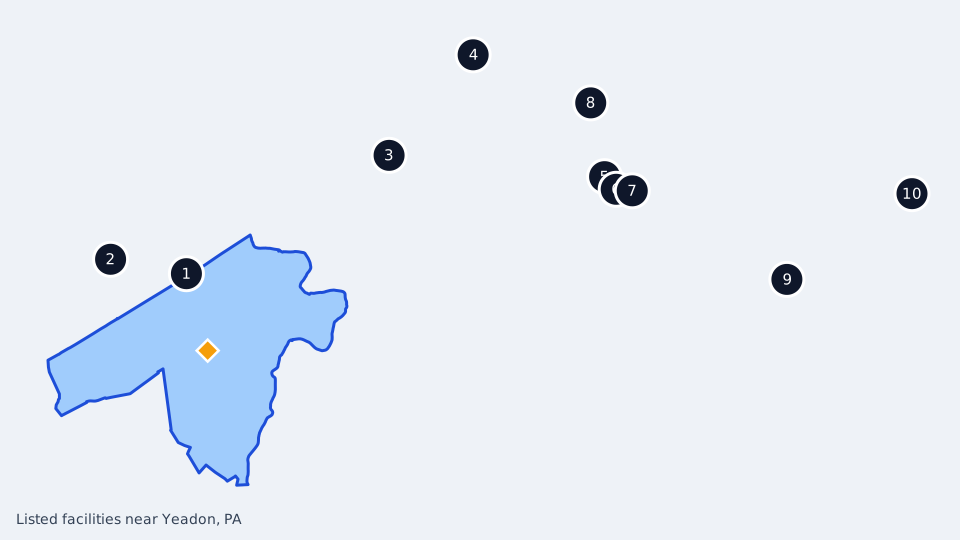
10 options near Yeadon, PA, nearest first. Compare services and locations, then call to check availability.
Call (888) 209-0266Ask about your optionsThis number connects to our central helpline, not directly to a listed facility.
Check which services are available for your needs.
Confirm payment options and any waiting time directly.
Ask what information the program needs from you.
When you call a methadone clinic, you can ask about their intake process, what documents to bring, and whether they offer medication-assisted treatment (MAT) as an outpatient service. Many clinics require a physical exam and a substance use assessment before your first dose. You can also ask about their hours, payment options, and any counseling or recovery support they provide alongside medication.
Specific details about individual programs in and near Yeadon are not available in available information.
Call (888) 209-0266
Methadone clinics provide one specific type of care: medication-assisted treatment for opioid use disorder. Methadone itself is a daily medication that reduces cravings and withdrawal symptoms, and federal rules require it to be dispensed at a licensed clinic rather than a regular pharmacy. Some programs are outpatient-only, while others also offer counseling, drug testing, and referrals to doctors who prescribe other medications like buprenorphine.
When comparing programs, ask whether counseling is included on site, how often you must visit, and whether the clinic can connect you to primary care or mental health services if you need more support.
Call (888) 209-0266Check which services each program reports offering.
Consider travel distance and whether care is in person or remote.
Ask the program directly about payment and coverage.
Confirm how to contact the program and what to expect.
When you call a methadone clinic for the first time, ask how soon a new patient can be seen and what you need to bring. Ask about dosing hours on weekdays and weekends, and how the clinic handles missed doses. Ask what the intake evaluation includes and whether there is a waitlist.
It also helps to ask how take-home doses are earned, what counseling is required and when it happens, and what happens if you need to travel. Finally, ask about payment: what insurance they accept or what the self-pay cost is per visit or per week.
Payment options at methadone clinics in Pennsylvania include private insurance, public coverage, sliding-scale fees, and self-pay. Private insurance plans are frequently accepted, but coverage details depend on the individual policy and clinic agreement. Public insurance like Medicaid or Medicare may be available at participating clinics; check eligibility directly.
Sliding-scale payment plans adjust costs according to income, making treatment more affordable. Self-pay is another straightforward method for those uninsured. To confirm which payment methods are accepted, reach out to the clinic for current policies.
Start with the basics that affect daily life: how far the clinic is from home or work, what time dosing hours open, and whether the schedule fits around a job or childcare. Then ask about the intake process, including how soon you can start treatment and what paperwork or payment you need on the first day. Compare counseling options next, since programs vary in whether therapy is individual, group, or both, and whether it is required with every visit.
Finally, ask how the clinic handles take-home doses, schedule conflicts, and referrals to other doctors, because these details shape how sustainable the program will be for you.
When you call a methadone clinic, you can ask about their intake process, what documents to bring, and whether they offer medication-assisted treatment (MAT) as an outpatient service.

If you or someone near you is in immediate danger, call 911 right away. Emergency responders can help regardless of the situation, and you do not need to be certain it is an emergency before calling. If you are worried about an overdose, many communities also provide naloxone, a medication that can reverse opioid overdoses, and emergency dispatchers can guide you through using it while help is on the way.
For methadone patients specifically, it is important that emergency staff know about methadone treatment, so mention it openly if you or a loved one is being treated.
If you or someone else is in immediate danger, call 911 now.
Call (888) 209-026633 Williams Drive, Lansdowne, PA, 19050
Active
53 North Union Avenue, Lansdowne, PA, 19050
Active
501 South 54th Street, Philadelphia, PA, 19143
Active
111 North 49th Street, Philadelphia, PA, 19139
Active
39th and Woodland Avenue, MHC, 7th Floor, Philadelphia, PA, 19104
Active
3900 Woodland Avenue, Building 3, Philadelphia, PA, 19104
Active
451 South University Avenue, Philadelphia, PA, 19104
Active
4040 Market Street, 2nd Floor, Suites 200 and 220, Philadelphia, PA, 19104
Active
1021 South 21st Street, Philadelphia, PA, 19146
Active
1233 Locust Street, 4th Floor, Philadelphia, PA, 19107
Active
Contact us for more information.
These lists use only what the 10 active facilities listed for Yeadon report to SAMHSA's FindTreatment.gov. No facility pays to be included or can ask to be moved. Reporting more options is not a measure of quality, outcomes or suitability for any person. A missing option means the facility did not report it to the source, not that it is not offered. Call the facility to confirm everything before relying on it.
How this list is made: each facility scores one point for each of these 7 payment and cost-assistance options it reports to SAMHSA's FindTreatment.gov (Medicaid; Medicare; Private health insurance; Military insurance (TRICARE); Cash or self-payment; Sliding fee scale; Payment assistance). A facility needs at least 4 to appear. Facilities are shown from the highest count to the lowest; facilities with the same count are in alphabetical order, which has no other meaning. Up to 10 are shown.
How this list is made: each facility scores one point for each of these 4 medications used in treatment it reports to SAMHSA's FindTreatment.gov (Buprenorphine; Methadone; Naltrexone; Medication for alcohol use disorder). A facility needs at least 2 to appear. Facilities are shown from the highest count to the lowest; facilities with the same count are in alphabetical order, which has no other meaning. Up to 10 are shown.
How this list is made: each facility scores one point for each of these 12 age groups and client groups accepted it reports to SAMHSA's FindTreatment.gov (Adolescents; Young adults; Adults; Seniors; Pregnant or postpartum women; Adult women; Adult men; Veterans; Active duty military; Criminal justice clients; Clients who have experienced trauma; Co-occurring mental and substance use disorders). A facility needs at least 5 to appear. Facilities are shown from the highest count to the lowest; facilities with the same count are in alphabetical order, which has no other meaning. Up to 10 are shown.
Start by looking for clinics that are licensed and accredited, and that offer the specific services you need, such as daily dosing or counseling. You can also ask about their wait times, take-home policies, and whether they accept your insurance or offer a sliding fee scale. Visiting or calling a few clinics can help you find the right fit for your schedule and treatment goals.
Methadone and buprenorphine are both FDA-approved medications for opioid use disorder, but they work differently in the body. Methadone is a full opioid agonist and is typically dispensed daily at a certified clinic. Buprenorphine is a partial agonist and can be prescribed by a qualified doctor, often allowing for take-home doses. Your healthcare provider can help determine which medication is best for you based on your medical history and treatment needs.
Yes, methadone is approved for use during pregnancy and is considered a standard approach to treating opioid use disorder in pregnant patients. Stopping opioids suddenly during pregnancy can be harmful, and methadone helps stabilize both the patient and the pregnancy. Babies exposed to methadone may need monitoring after birth for withdrawal symptoms, so let your prenatal care team know about your treatment so they can plan accordingly.
The first visit usually involves an intake assessment, paperwork, a medical history, and a physical check such as bloodwork or a drug screen. If you are admitted, you receive your first dose the same day, and medical staff watch how you respond before you leave. Expect the process to take a few hours, and ask in advance what identification, payment, or insurance details you should bring.
How long you stay on methadone is a personal decision made with your treatment team. Some people use it for a year or two, while others stay on it for many years because it keeps them stable. Research generally supports longer treatment periods, and reducing the dose too quickly raises the risk of relapse. There is no requirement to stop by a certain date, so the timeline should reflect your progress and goals.
Last updated