 National Methadone Clinics
592 Medical Park Drive, Suite A, Gainesville, GA, 30501
Active
- Outpatient
- Detox
- Medication-assisted treatment
- Medicare
City
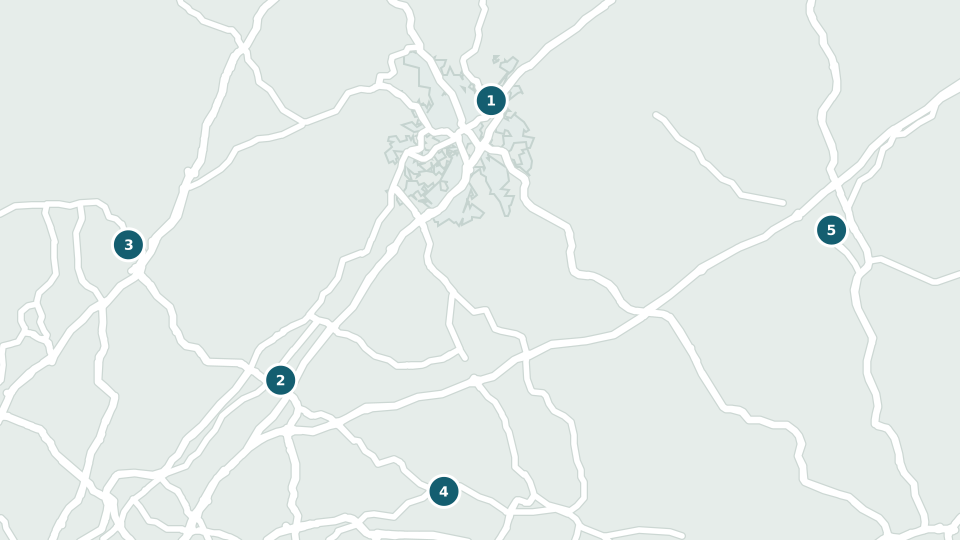
5 options near Gainesville, GA, nearest first. Compare services and locations, then call to check availability.
Call (888) 209-0266Ask about your optionsThis number connects to our central helpline, not directly to a listed facility.
Check which services are available for your needs.
Confirm payment options and any waiting time directly.
Ask what information the program needs from you.
If you are looking into methadone treatment around Gainesville, it helps to know what to ask before your first appointment. A good place to start is whether the program is an opioid treatment provider and what medications it offers. One program in Gainesville is recorded as providing both methadone and buprenorphine, along with outpatient services and opioid detox, so you can ask how these options are combined into a single plan of care.
You can also ask whether the program accepts Medicare, since that coverage is confirmed for at least one local option, and whether it serves adults of your gender, since area programs are recorded as serving both men and women. Other practical questions include what documents to bring, how often you will need to visit in the first weeks, and what counseling is included alongside medication.
Call (888) 209-0266
Methadone care is structured as ongoing outpatient treatment rather than a short stay. In the beginning, the clinic typically sees you each day so the medical staff can adjust your dose safely and watch for problems. As you stabilize, the schedule usually loosens, with earned take-home medication for days you cannot come in.
Alongside the medication, most programs include some form of counseling, and the quality of that counseling is often what separates one clinic from another. When weighing your options, compare how each program handles missed doses, vacation or travel passes, dose changes, and transitions to a different provider if you move.
Call (888) 209-0266Check which services each program reports offering.
Consider travel distance and whether care is in person or remote.
Ask the program directly about payment and coverage.
Confirm how to contact the program and what to expect.
Good first-call questions cover scheduling, requirements, and cost. Ask when the clinic opens for dosing and whether weekend hours differ. Ask what the intake process involves and how long it takes to get admitted.
Ask whether counseling is on site, how often it is required, and whether sessions work around a job. Ask how the clinic awards take-home doses and what its policy is on missed visits. Ask what payment options exist, including insurance plans accepted and any self-pay rate, so you know the commitment before you arrive.
If you are considering treatment at a methadone clinic in Georgia, understanding payment options ahead of time can make the process easier. Self-pay is a standard choice for many people, allowing visitors to pay out of pocket for medication and counseling services. Others rely on private insurance plans, which frequently cover opioid treatment, though the extent of coverage depends on the specific policy, so confirming eligibility with your insurer is a wise first step.
Public programs may assist eligible residents, and sliding-scale fees are commonly available to help reduce costs for those with limited income, making treatment more accessible statewide.
Compare nearby programs on three practical fronts: access, structure, and support. Access means dosing hours, location relative to your routine, and how quickly new patients can start. Structure means the daily or weekly schedule, how take-home doses work, and what happens if you travel or miss a day.
Support means counseling availability, whether staff help with referrals to other services, and whether the clinic communicates respectfully with patients. There is no single best clinic for everyone; the right choice is the one whose schedule, rules, and atmosphere you can realistically live with for months or years.
If you are looking into methadone treatment around Gainesville, it helps to know what to ask before your first appointment.

Emergencies always come first. Call 911 for overdose, serious injury, or any medical problem that cannot wait for a clinic visit, and tell responders what medications are involved, including methadone, so they can respond appropriately. If you cannot reach your clinic during a crisis, an urgent care center or emergency room can contact them for you.
For emotional crises, the 988 line connects you with trained counselors any time of day. Once the immediate danger has passed, let your clinic know what happened so they can adjust your care if needed.
If you or someone else is in immediate danger, call 911 now.
Call (888) 209-0266592 Medical Park Drive, Suite A, Gainesville, GA, 30501
Active
4271 South Lee Street, Suite 101, Buford, GA, 30518
Active
514 West Maple Street, Suite 1206, Cumming, GA, 30040
Active
85 Auburn Park Drive, Auburn, GA, 30011
Active
734 Hospital Road, Commerce, GA, 30529
Active
Yes. Records for the area show at least one Gainesville program that provides methadone maintenance, buprenorphine treatment, outpatient care, and opioid detox services, with additional opioid treatment programs within a short drive.
It helps to bring a photo ID, your insurance card if you have one, a list of current medications, and any records from previous treatment. The intake staff will ask about your health history and substance use so they can recommend the right level of care, so plan for the first appointment to take longer than a regular visit.
Pregnant patients are typically encouraged to continue methadone treatment rather than quit abruptly, because untreated opioid use disorder carries greater risks for both the patient and the pregnancy. A newborn exposed to methadone can have withdrawal symptoms after birth, which hospital staff know how to manage. Make sure your obstetrician and your clinic coordinate care throughout the pregnancy.
Your first day centers on paperwork and evaluation. You will meet with staff who review your medical and substance use history, and the medical team decides on a starting dose, which is deliberately low for safety. You usually take that dose on site and wait so staff can check on you. Call ahead to confirm what documents to bring, since requirements vary between clinics.
Treatment length varies from person to person. Some patients taper off after months of stability; others continue for years because the medication prevents relapse and lets them live normally. Coming off too fast is one of the main reasons people return to opioid use, so any decision to reduce your dose should be gradual and guided by your treatment team. You are not locked into a timeline.