 National Methadone Clinics
270 Heritage Walk, Woodstock, GA, 30188
Active
- Day treatment
- Medication-assisted treatment
- Medicaid
- Medicare
City
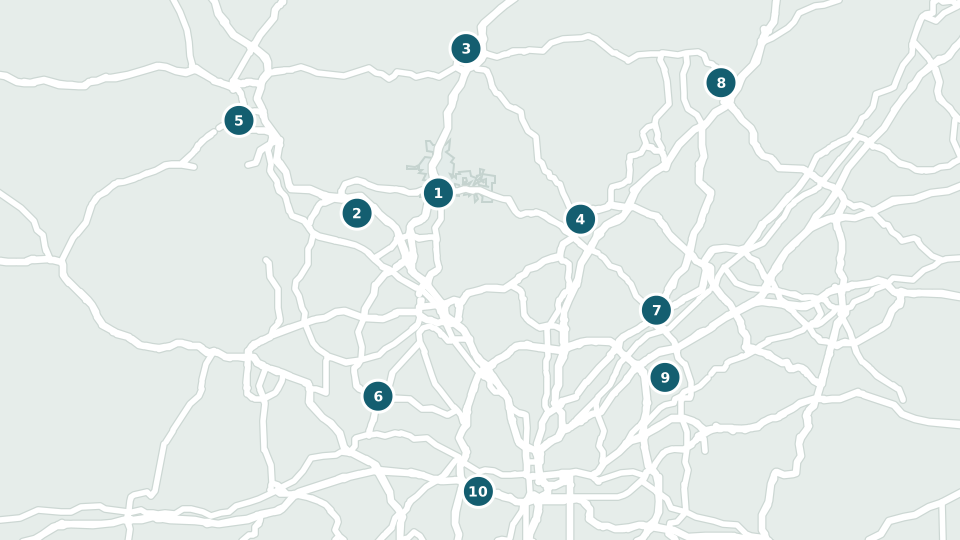
10 options near Woodstock, GA, nearest first. Compare services and locations, then call to check availability.
Call (888) 209-0266Ask about your optionsThis number connects to our central helpline, not directly to a listed facility.
Check which services are available for your needs.
Confirm payment options and any waiting time directly.
Ask what information the program needs from you.
When you are looking for medication-assisted treatment in the Woodstock area, it helps to know what to ask before you commit to a program. Start by asking whether the clinic currently prescribes methadone for opioid use disorder, since not every treatment center offers every medication. You can also ask what an intake appointment involves, what documents to bring, whether counseling is part of the program, and what the visit schedule looks like during the first weeks of care.
Programs vary in hours, wait times, and payment options, so these are fair questions to raise on a first phone call. One local option, Woodstock Comprehensive Treatment in Woodstock, is an adult program accredited by CARF that serves both men and women and also offers buprenorphine, another medication used to treat opioid dependence. On a first visit, plan to talk through your health history, your goals, and how the program fits your daily routine, so you can decide whether it feels right for you.
Call (888) 209-0266
Most methadone treatment happens in an outpatient setting, because the medication requires supervised daily dosing, at least at the start. Some clinics connect patients to higher levels of care, like inpatient detox or residential programs, if needed, while others focus only on outpatient medication and counseling. A practical way to compare programs is to look at visit frequency, dosing hours, counseling options, and how the program handles travel, work schedules, or missed doses.
Asking these questions up front gives you a clearer picture of whether a program fits your daily life.
Call (888) 209-0266Check which services each program reports offering.
Consider travel distance and whether care is in person or remote.
Ask the program directly about payment and coverage.
Confirm how to contact the program and what to expect.
A first call to a clinic is your chance to learn how the program will fit your life. Practical questions include: What are the dosing hours? How does intake work and what documents do I need?
What does treatment cost, and what payment options are available? Is counseling included with medication? How do patients earn take-home doses?
What is the policy on missed visits or relapse? Clinics that answer these questions clearly and respectfully are giving you useful information about what treatment there would be like.
If you are considering treatment at a methadone clinic in Georgia, understanding payment options ahead of time can make the process easier. Self-pay is a standard choice for many people, allowing visitors to pay out of pocket for medication and counseling services. Others rely on private insurance plans, which frequently cover opioid treatment, though the extent of coverage depends on the specific policy, so confirming eligibility with your insurer is a wise first step.
Public programs may assist eligible residents, and sliding-scale fees are commonly available to help reduce costs for those with limited income, making treatment more accessible statewide.
Start with the kinds of care relevant to your needs.
Check each program’s listed services, location and contact details.
Contact a program to confirm availability, costs and the next step.
A useful way to compare clinics is to make a short list of questions and call each one. Ask about dosing hours, how long intake takes, whether the clinic offers counseling or groups, and how take-home medication works as treatment progresses. Ask what the program costs and which payment options they accept.
Pay attention to how you are treated on the phone, because a respectful, direct answer is a good sign of how you will be treated as a patient. Choose the program that is both accessible and straightforward with you.
When you are looking for medication-assisted treatment in the Woodstock area, it helps to know what to ask before you commit to a program.

If a situation feels life-threatening, call 911 immediately instead of waiting to see whether it passes. Emergency medical teams handle drug-related emergencies every day, and calling early improves outcomes. If you or someone close to you is thinking about suicide or self-harm, you can also call or text 988, the Suicide and Crisis Lifeline, which is available around the clock.
Having these numbers saved in your phone before a crisis makes them easier to reach when every minute counts.
If you or someone else is in immediate danger, call 911 now.
Call (888) 209-0266270 Heritage Walk, Woodstock, GA, 30188
Active
4462 Bretton Court, Building 2, Acworth, GA, 30101
Active
230 Riverstone Parkway, Suite C, Canton, GA, 30114
Active
601 Bombay Lane, Roswell, GA, 30076
Active
218 Stonewall Street, Cartersville, GA, 30120
Active
1790 Mulkey Road, Suite 3-A, Austell, GA, 30106
Active
6063 Peachtree Parkway, Suite 103-B, Peachtree Corners, GA, 30092
Active
514 West Maple Street, Suite 1206, Cumming, GA, 30040
Active
4255 Chamblee Tucker Road, Atlanta, GA, 30340
Active
2563 Martin Luther King Jr Drive, Atlanta, GA, 30311
Active
When you call, ask whether they currently prescribe methadone for opioid use disorder, what intake involves, what documentation to bring, and how soon a first appointment is available. It is also fair to ask about costs, insurance, counseling options, and visit schedules before you commit.
Most programs begin with an intake assessment that covers your health history and substance use, followed by a physical exam and lab work before medication starts. You will also talk about a treatment plan and counseling schedule, and early visits are usually more frequent while your dose is being stabilized.
Methadone works by acting on the same receptors as other opioids, which prevents withdrawal symptoms and blunts cravings without producing the same intense effect. It is taken once a day at the clinic, usually under observation at first. Over time, many patients earn take-home doses and visit less often. The medication is one part of treatment, alongside counseling and medical monitoring.
Most people start with a visit every day, since methadone must be dispensed under supervision when treatment begins. As you show stability, the clinic can increase the number of doses you take at home, cutting trips down to every few days or even weekly. Federal rules set the framework, but each clinic applies them a bit differently. Ask what their specific expectations are for earning take-home doses.
There is no single price, because clinics charge differently and coverage rules differ. Some people pay little or nothing through Medicaid, while others pay out of pocket with income-based discounts or payment plans. The practical move is to call clinics near you and ask specifically about intake fees, monthly costs, insurance accepted, and sliding-scale options. Most clinics are used to these questions and will explain their fees directly.